Buying property in Mexico — the complete American's guide.
The fideicomiso, closing costs, financing, residency. Source-cited, updated quarterly.
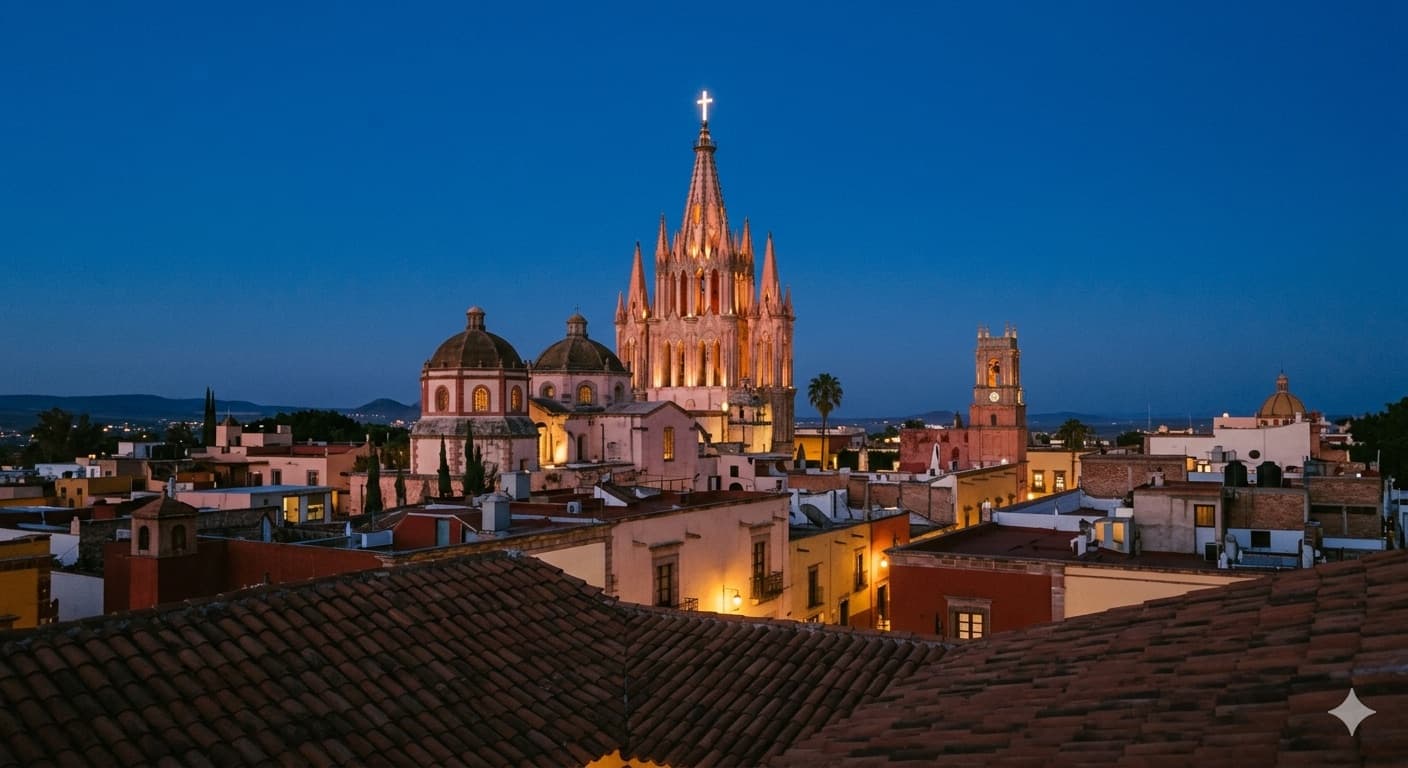 San Miguel de Allende, 2026
There are roughly 95,000 monthly Google searches for "buy property in Mexico" from US-based users. Most results are broker advertising or bank pages. We wrote this because we got tired of sending friends links to bad ones.
This is the core guide to buying residential property in Mexico as an American. It covers the legal framework, the actual transaction costs, financing options, residency math, the scams to avoid, and the markets we'd buy in today. Updated will be published periodically inThe Brief.
 Aldea Zama, Tulum. Completed condos, 2025
The legal framework
Foreign citizens cannot directly own land in Mexico's restricted zone within 50 kilometers of any coastline or 100 kilometers of any international border. This rule is in Article 27 of the Mexican Constitution and covers most places North Americans want to buy: Tulum, Playa del Carmen, Cabo, Puerto Vallarta, Mazatlán.
Outside the restricted zone, Mexico City, San Miguel de Allende, Mérida, Lake Chapala, foreigners can hold direct title in their own name, exactly as a Mexican citizen would.
Inside the restricted zone, you have two paths: a fideicomiso (a 50-year, automatically-renewable bank trust) or a Mexican corporation (which only makes sense if the property is for commercial or rental income).
The fideicomiso is the answer for ~95% of foreign buyers. The corporation is the answer for the rest, and the rest is mostly people who think they need a corporation but don't.
It's not ejido land. Ejido is communally-held agrarian land that cannot be sold to foreigners or, often, to anyone outside the ejido. Sellers and unscrupulous brokers still market it, sometimes at coastal prices. Confirm titled (private) status at the Public Registry before any money moves.
The notario is real. Mexican notarios públicos are appointed by the state governor and are public officials, not private lawyers. Verify the patent number against the state registry directly — fake-notario closings are how foreign buyers lose seven figures.
Fideicomiso, plain English
A fideicomiso is a Mexican bank trust. You — the foreign buyer — are the beneficiary. The bank — Banorte, Scotia, BBVA, Intercam — holds legal title. You hold every economic right associated with ownership: use, rent, renovate, sell, leave to heirs.
Setup cost is typically $1,800–$2,800. Annual maintenance is $550–$750. We'll do the side-by-side bank comparison in the fideicomiso explainer.
What it costs
Foreign buyers should plan for 6%–8% of purchase price in closing costs. The major lines, on a hypothetical $480,000 Tulum condo:
Two costs that aren't in this table because they hit later: predial, the annual municipal property tax (modest by US standards, typically 0.05%–0.30% of cadastral value), and ISR, the federal capital-gains withholding at sale (up to 35% on the notario's gain calculation, with treaty offsets and a primary-residence exemption available in some cases). Both deserve a line in your hold-period math.
| Line | USD | % of price |
|---|---|---|
| Acquisition tax (QR) | $14,400 | 3.0% |
| Notario público | $7,200 | 1.5% |
| Fideicomiso setup | $2,500 | 0.5% |
| Public registry | $2,400 | 0.5% |
| Currency conversion | $7,200 | 1.5% |
| Total | $33,700 | 7.0% |
How buyers fund it
Most foreign buyers in Mexico don't take a Mexican mortgage. Four common paths, ranked by frequency:
- HELOC against US property (~50%). Rate often beats Mexican lending. No FX risk on debt service. Variable, so model the upside scenario too.
- Cash from sale of a US home (~25%). Common for retirees consolidating into one residence.
- Cross-border US lender (~15%). Specialty firms underwriting USD mortgages on Mexican collateral. Higher rates, but no US-asset lien required.
- Mexican peso mortgage (~10%). Local rates run 8–11%. The FX exposure carries risk for the buyer, which is something to ensure you model before purchasing.
The markets that make sense
The shortlist:
- Mérida — slow growth, low drama.
- San Miguel de Allende — mature, expensive, walkable.
- Tulum — volatile and overheated; opportunity in resale.
- Lake Chapala (Ajijic) — retiree market, low liquidity.
- Puerto Vallarta — established Pacific option.